
Nitric oxide plays an important role in circulation, helping blood vessels relax and support healthy blood flow. This guide explores nitric oxide foods and supplements, how they work in the body, and natural ways people support nitric oxide production.
Understanding Nitric Oxide and Why It Matters
Interest in nitric oxide foods and supplements has grown as more people look for simple, natural ways to support circulation, steady energy, and long-term cardiovascular health.
Nitric oxide isn’t something you consume directly — it’s a molecule your body produces — yet daily habits strongly influence how efficiently it’s made. When production is supported, blood vessels can relax and widen, helping oxygen and nutrients move throughout the body more effectively.
Understanding how food, lifestyle and nutritional support can influence nitric oxide production provides a useful starting point for exploring ways to support this system through everyday choices.
Quick Answer
Nitric oxide is produced naturally in the body and plays a role in normal blood vessel function and circulation. Certain foods provide dietary nitrates that the body can convert through pathways involved in nitric oxide production, while some supplements contain ingredients intended to support the same system.
Food, lifestyle and supplement choices can all play a role, but their effects can vary depending on the individual and the ingredients involved.
On this page
Jump to any section
What Are Nitric Oxide Foods?
Nitric oxide foods are foods rich in dietary nitrates, antioxidants, and amino acids that help the body produce nitric oxide — a molecule that supports healthy blood flow, circulation, and vascular function.
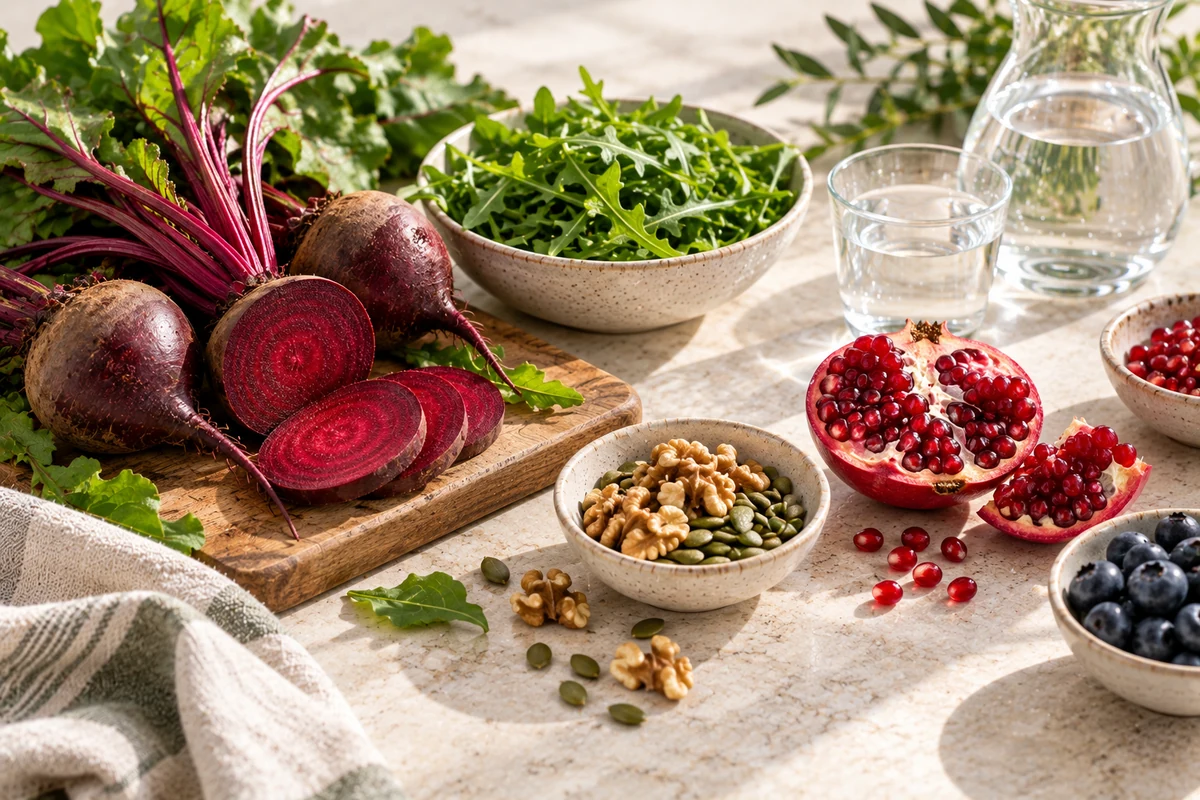
Common nitric oxide supporting foods include leafy greens, beetroot, garlic, citrus fruits, nuts, seeds, and antioxidant-rich fruits like berries and pomegranate.
- Leafy greens
- Beetroot
- Garlic
- Citrus fruits
- Nuts and seeds
- Berries and pomegranate
Eating these foods regularly helps provide the nutrients the body uses to maintain healthy nitric oxide production naturally.
Why Nitric Oxide Matters for Energy and Circulation
Nitric oxide plays a key role in vascular health by signalling blood vessels to relax, improving blood flow throughout the body. This supports:
- Efficient oxygen delivery
- Nutrient transport to tissues
- Cardiovascular function
- Exercise endurance
- Recovery processes
- Healthy blood pressure regulation
As nitric oxide production naturally declines with age — and can be influenced by stress, diet quality, and activity levels — supporting this system becomes increasingly relevant.
Many people aren’t looking for dramatic changes. They simply want to feel steady, capable, and well supported as life evolves.
Understanding how nitric oxide foods and supplements work together can help you make more informed choices about supporting your long-term cardiovascular health.
How the Body Produces Nitric Oxide
The body produces nitric oxide through two main pathways that work together to support healthy circulation, which is why understanding nitric oxide foods and supplements can help you take a more informed approach to supporting your wellbeing.
The first pathway involves converting the amino acid L-arginine into nitric oxide through enzymatic processes. This pathway depends on adequate nutrient intake and overall metabolic health.
The second pathway relies on dietary nitrates found in vegetables such as leafy greens and beetroot. These nitrates are converted into nitric oxide through a process that begins in the mouth and continues throughout the digestive system.
Because both pathways rely on nutrition, lifestyle habits, and supportive nutrients, nitric oxide foods and supplements can work together to help support consistent nitric oxide production over time.
You can explore the full nutrient profile in our ingredients overview.
Best Nitric Oxide Foods to Include Daily
A variety of foods can provide nutrients involved in the body’s natural nitric oxide pathways. Rather than relying on one particular food, including different nitrate-rich and nutrient-dense options can provide a broader nutritional foundation.
Leafy Greens
Spinach, arugula, kale, and lettuce are among the richest sources of dietary nitrates. Regular intake helps supply the raw materials needed for nitric oxide production.
Beetroot
Beets are widely recognised for their ability to support circulation due to their nitrate content. Many people include beetroot juice, powders, or whole beets in meals.
Garlic
Garlic contains compounds that support vascular health and nitric oxide pathways when used consistently.
Citrus Fruits
Vitamin C helps stabilise nitric oxide, protecting it from oxidative breakdown.
Nuts and Seeds
Rich in arginine and healthy fats, they support nitric oxide synthesis and cardiovascular function.
Berries and Pomegranate
Polyphenols in these fruits support endothelial health — a key factor in nitric oxide availability.
Lifestyle Habits That Naturally Support Nitric Oxide
Supporting nitric oxide is not only about food.
Regular movement stimulates nitric oxide release and supports vascular flexibility. Stress management helps reduce oxidative stress that can impair nitric oxide availability. Sleep supports hormonal balance and recovery processes, while maintaining oral microbiome balance helps support nitrate conversion.
Together, these habits create a supportive environment for healthy circulation.
Signs You May Be Exploring Nitric Oxide Support
People may become interested in nitric oxide support for a variety of reasons, including:
- learning more about circulation and vascular health
- supporting an active lifestyle
- exploring nutrition for healthy ageing
- becoming more interested in cardiovascular wellbeing
- looking for practical ways to support everyday nutrition
These interests don’t necessarily indicate a problem with nitric oxide production. They simply reflect some of the reasons people begin exploring the role nitric oxide plays in the body.
Where Nitric Oxide Supplements Fit Into a Modern Routine
Nitric oxide supplements are generally designed to provide ingredients involved in the body’s natural nitric oxide pathways. Depending on the formula, these may include dietary nitrates, amino acids or other nutrients associated with nitric oxide production.
They can be used alongside a balanced diet rather than as a replacement for nitrate-rich foods and other nutritious whole foods.
When comparing supplements, the complete formula matters. Some focus specifically on nitric oxide support, while others combine it with additional nutritional ingredients in a broader daily supplement.
A Simple Approach: Food First, Then Support
Rather than thinking in extremes, many people find success with a layered approach:
- Build meals around whole foods
- Maintain supportive lifestyle habits
- Use nutritional support when helpful
This reduces pressure while creating sustainable consistency.
How Nitric Oxide Foods and Supplements Work Together
Nitric oxide foods and supplements can support the same biological pathways in different ways. Nitrate-rich foods such as leafy greens and beetroot provide dietary nitrates, while some supplements provide concentrated nitrates or other ingredients involved in nitric oxide production.
They don’t need to be viewed as alternatives to one another. A nutrient-rich diet can provide the foundation, while supplements may provide additional nutritional support depending on the ingredients and individual needs.
A Gentle Note on Simplifying Daily Nutrition
Supporting nitric oxide doesn’t need to mean adding multiple products to your routine. The most practical approach is one that complements the nutritious foods and healthy habits already forming the foundation of your diet.
A Thoughtful Way to Support Nitric Oxide — Without Adding Complexity
Some supplements focus specifically on nitric oxide support, while others combine it with broader nutritional ingredients in one formula.
Activ Greens takes the broader approach. Its Nitric Oxide Blend is combined with Organic Greens and Stress & Detox blends, bringing three areas of daily nutritional support together in one supplement.
This allows nitric oxide support to form part of a wider nutritional formula rather than being treated as a standalone supplement.
Practical Ways to Support Nitric Oxide Naturally
Small habits repeated consistently often have the greatest impact.
Consider:
- Adding greens to one meal daily
- Including nitrate-rich vegetables regularly
- Staying hydrated
- Moving frequently
- Supporting sleep routines
- Managing stress proactively
Consistency builds resilience over time.
Nitric Oxide and Healthy Ageing
Healthy blood vessel function remains important throughout life, and nitric oxide plays a role in the normal processes that help blood vessels relax and maintain healthy circulation.
Because nitric oxide production can change with age, maintaining a nutritious diet, regular physical activity and other healthy lifestyle habits can help support the body’s natural nitric oxide pathways over time.
Bringing It All Together
Supporting the body’s natural nitric oxide pathways can involve several complementary factors, including nitrate-rich foods, regular physical activity and, where appropriate, nutritional supplements.
The right approach will depend on your diet, lifestyle and individual needs, with whole foods and healthy habits remaining the foundation.
FAQ
What are nitric oxide foods?
Nitric oxide foods are foods rich in nitrates, antioxidants, and amino acids that help the body produce nitric oxide, supporting healthy blood flow and circulation.
What supplements help increase nitric oxide?
Supplements containing L-arginine, L-citrulline, beetroot extract, and antioxidant compounds may support nitric oxide production alongside a balanced diet.
Can diet alone support nitric oxide levels?
A diet rich in leafy greens, vegetables, fruits, and whole foods can support nitric oxide production, though some people use supplements for additional support.
Why does nitric oxide decline with age?
Nitric oxide production naturally decreases due to changes in vascular function, lifestyle factors, and oxidative stress.
For those looking to include nitric oxide support within a broader daily supplement, Activ Greens combines its Nitric Oxide Blend with Organic Greens and Stress & Detox blends in one formula.
This brings nitric oxide support together with broader plant-based nutrition rather than treating it as a standalone part of the daily routine.
